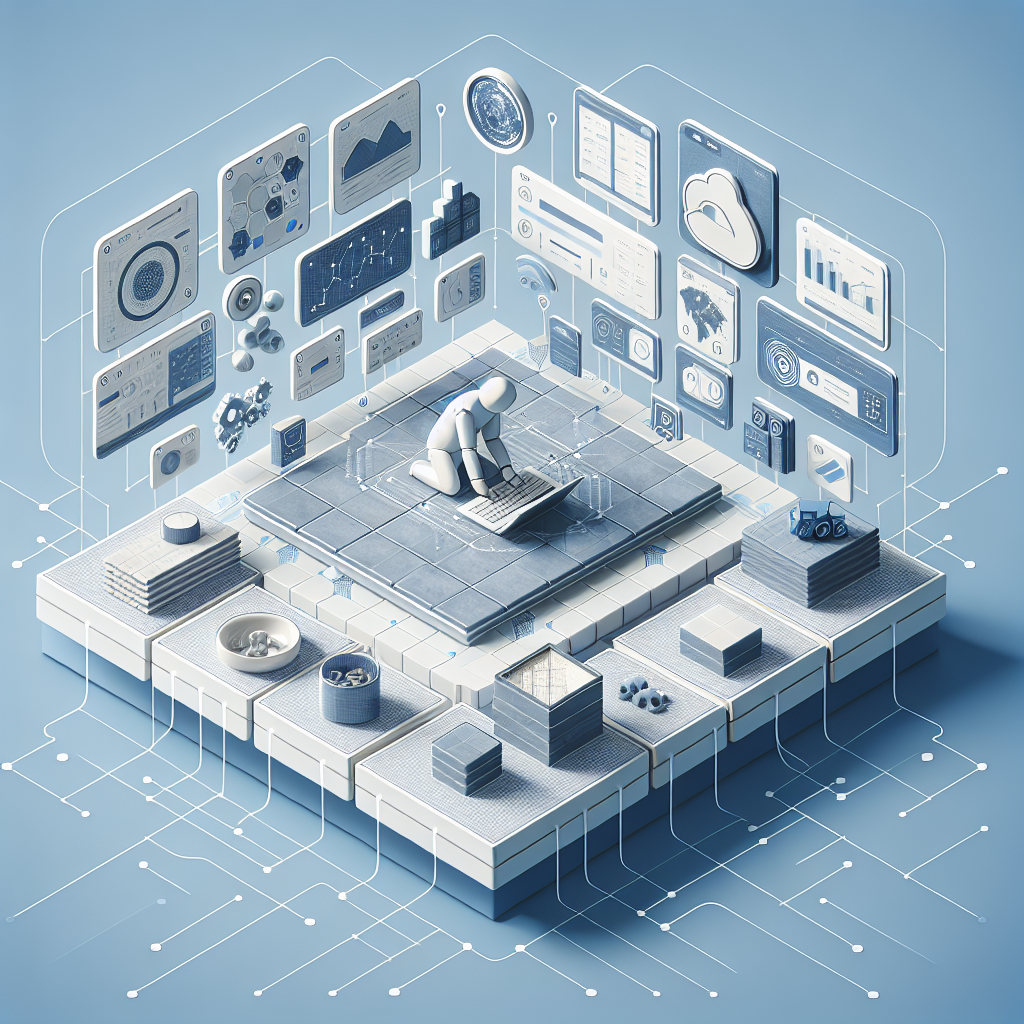

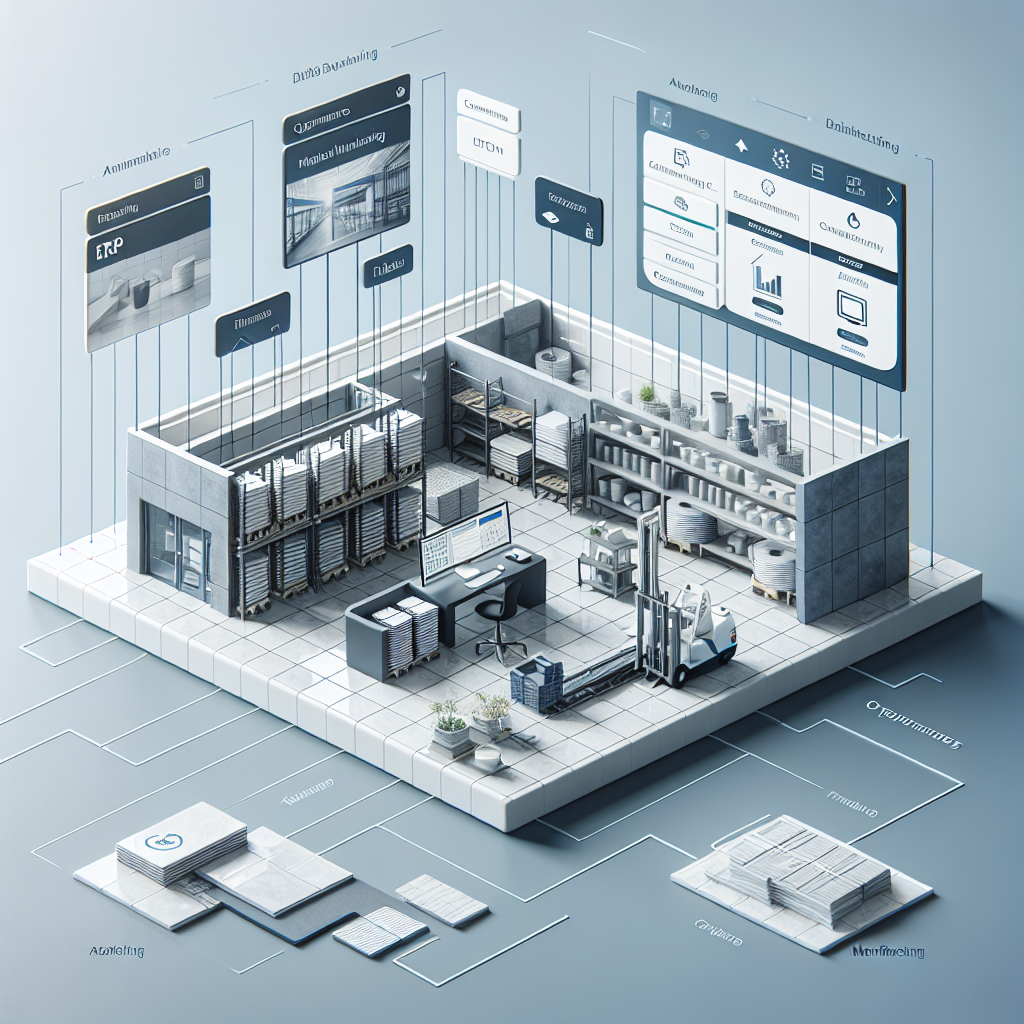
The tiles and ceramics industry is undergoing a rapid shift toward digital transformation, driven by rising competition, expanding dealer networks, and increasing customer expectations. Yet, many manufacturers and distributors still struggle with fragmented systems, manual processes, and inconsistent data flows. This often leads to inventory chaos, delayed dealer orders, and lost revenue opportunities.
From my experience advising tile manufacturers and distributors, the root cause is rarely demand or production capability. It is the lack of integration between ERP systems, CRM platforms, and B2B ecommerce solutions. When these systems operate in silos, inefficiencies multiply across the organization.
This is where a unified digital ecosystem—combining ERP for tiles industry operations, CRM automation, and ecommerce platforms like Magento or Shopify for tiles ecommerce—becomes a strategic necessity rather than a luxury.
Understanding the Core Problem: Disconnected Systems
Most tile businesses operate with a mix of legacy software, spreadsheets, and manual coordination between departments. Sales teams rely on phone calls or WhatsApp to capture dealer orders. Inventory teams update stock manually. Finance teams reconcile invoices separately.
This leads to several critical issues:
- Inaccurate inventory visibility across warehouses
- Frequent stockouts or overstocking
- Delayed dealer order processing
- Pricing inconsistencies across regions
- Poor customer experience for B2B buyers
Without real-time synchronization, even the most capable operations team cannot maintain efficiency.
ERP for Tiles Industry: The Backbone of Operations
An ERP system, especially solutions like Odoo ERP for manufacturing or industry-specific ERP platforms, acts as the central nervous system of the business.
A well-implemented ERP enables:
- Real-time inventory tracking across multiple warehouses
- Batch and lot tracking for tile designs and finishes
- Automated production planning based on demand forecasts
- Integrated financial management and reporting
- Centralized data access for all departments
However, ERP alone is not enough. Many companies implement ERP but fail to extend its capabilities to customer-facing systems, leaving a gap between operations and sales.
The Role of B2B Ecommerce in Dealer Order Efficiency
Dealer networks are the lifeline of tile distribution. Yet, traditional ordering methods are slow, error-prone, and difficult to scale.
A dedicated tiles ecommerce development strategy transforms this process. By implementing platforms like Magento for tiles business or Shopify for tiles ecommerce, companies can empower dealers with self-service capabilities.
Key benefits include:
- 24/7 ordering access for dealers
- Real-time product catalog with design variations
- Dynamic pricing based on dealer tiers
- Instant order confirmation and tracking
- Reduced dependency on sales representatives
When integrated with ERP, the ecommerce platform pulls live inventory data and pushes orders directly into the system, eliminating manual intervention.
CRM Automation: Strengthening Dealer Relationships
While ERP manages operations and ecommerce handles transactions, CRM bridges the relationship layer.
CRM systems help tile businesses:
- Track dealer interactions and purchase history
- Automate follow-ups and promotional campaigns
- Manage sales pipelines and regional performance
- Provide personalized pricing and product recommendations
In practice, CRM automation ensures that no dealer inquiry is lost and every opportunity is tracked systematically. This is especially important in a competitive market where responsiveness can directly impact sales.
Integration: The Game-Changer for Digital Transformation
The real transformation happens when ERP, CRM, and ecommerce platforms are fully integrated.
Instead of operating as separate tools, they function as a unified ecosystem:
- Orders placed on the ecommerce platform instantly reflect in ERP
- Inventory updates in ERP are visible to dealers in real time
- CRM captures every transaction and interaction automatically
- Finance and logistics teams work with accurate, synchronized data
This integration eliminates duplication, reduces errors, and significantly improves decision-making speed.
For example, a distributor managing multiple warehouses can use warehouse automation for tiles industry operations to ensure that stock levels are updated in real time. When a dealer places an order online, the system automatically allocates inventory from the nearest warehouse, optimizing delivery timelines.
Warehouse Automation: Bringing Precision to Inventory Management
Inventory chaos is one of the most expensive problems in the tiles industry. Tiles come in multiple sizes, finishes, and batches, making manual tracking highly unreliable.
Warehouse automation solutions, when integrated with ERP, provide:
- Barcode or RFID-based inventory tracking
- Automated stock movement recording
- Optimized picking and packing processes
- Reduced human errors in dispatch
- Faster order fulfillment cycles
This level of precision not only improves operational efficiency but also enhances customer satisfaction by ensuring timely deliveries.
Real-World Scenario: From Chaos to Control
Consider a mid-sized tile manufacturer managing 500+ SKUs across three warehouses. Before digital integration, their challenges included frequent stock mismatches, delayed dealer orders, and high operational costs.
After implementing Odoo ERP for manufacturing, integrating it with a Magento-based B2B ecommerce platform, and deploying CRM automation:
- Inventory accuracy improved by over 90 percent
- Dealer order processing time reduced from 24 hours to under 2 hours
- Sales team productivity increased significantly
- Revenue grew due to better dealer engagement and faster fulfillment
This is not an isolated case. Similar outcomes are consistently observed when businesses adopt a structured digital transformation approach.
Choosing the Right Technology Stack
Not all solutions fit every business. The choice between Magento for tiles business and Shopify for tiles ecommerce depends on factors like customization needs, scalability, and budget.
Similarly, ERP selection should align with manufacturing complexity, warehouse operations, and reporting requirements.
As a consultant, I recommend:
- Prioritizing integration capabilities over standalone features
- Selecting scalable platforms that support future growth
- Ensuring mobile accessibility for field sales teams
- Investing in user training and change management
Technology is only as effective as its adoption within the organization.
Conclusion: Turning Operational Complexity into Competitive Advantage
The tiles and ceramics industry is inherently complex, but that complexity does not have to translate into inefficiency.
By integrating ERP for tiles industry operations with CRM automation and robust B2B ecommerce platforms, businesses can eliminate inventory chaos, streamline dealer orders, and unlock new growth opportunities.
Digital transformation is no longer optional. Companies that invest in tiles ecommerce development, warehouse automation for tiles industry processes, and integrated systems will not only improve operational efficiency but also position themselves as market leaders.
The question is not whether to adopt these technologies, but how quickly you can implement them to stay ahead of the competition.
FAQs
What is the role of ERP in the tiles industry?
ERP systems help manage inventory, production, finance, and logistics in a centralized platform, improving efficiency and data accuracy.
How does B2B ecommerce benefit tile distributors?
It enables dealers to place orders online, access real-time inventory, and receive faster order processing, reducing dependency on manual methods.
Which platform is better for tiles ecommerce: Magento or Shopify?
Magento is ideal for highly customized and complex requirements, while Shopify is suitable for faster deployment and simpler operations.
Can CRM improve dealer relationships in the tiles business?
Yes, CRM systems automate communication, track interactions, and provide insights that help strengthen dealer engagement and retention.
What is warehouse automation in the tiles industry?
It involves using technology like barcodes and ERP integration to track inventory, optimize storage, and improve order fulfillment accuracy.