
The tiles and ceramics industry is undergoing a structural shift driven by AI-powered ERP systems, predictive analytics, and integrated B2B ecommerce platforms. Traditional manufacturing and distribution models are no longer sufficient to compete in a global, digitally connected marketplace. Businesses adopting ERP for tiles industry operations, combined with advanced analytics and ecommerce solutions, are seeing measurable improvements in operational efficiency, demand forecasting, and revenue growth.
From my experience advising tile manufacturers and distributors, the organizations that succeed today are those that align production, supply chain, and digital commerce into a unified, data-driven ecosystem.
The Shift Toward AI-Powered ERP in Tile Manufacturing
Modern ERP systems are no longer just transactional tools. AI-enabled ERP platforms, including solutions like Odoo ERP for manufacturing, are transforming how tile companies manage production planning, procurement, and quality control.
Key capabilities now include:
- Predictive production planning based on historical demand and seasonal trends
- Automated raw material procurement aligned with forecast accuracy
- Real-time monitoring of kiln performance and production efficiency
- Integrated financial and operational dashboards for decision-making
For tile manufacturers dealing with fluctuating raw material costs and energy-intensive production, AI-driven ERP reduces waste, minimizes downtime, and improves margin control.
Predictive Analytics in Demand Forecasting and Inventory Optimization
One of the most impactful changes is the use of predictive analytics to align manufacturing output with market demand. Instead of reactive production cycles, businesses are moving toward proactive planning.
With predictive analytics integrated into ERP systems:
- Sales data from B2B ecommerce platforms feeds directly into demand forecasts
- Inventory levels are optimized across warehouses and distribution centers
- Overstocking and stockouts are significantly reduced
- Seasonal and regional buying patterns are accurately anticipated
This is especially critical for companies operating in multiple export markets, where demand variability can disrupt traditional planning models.
The Rise of Tiles Ecommerce Development in B2B Markets
The global shift toward digital commerce is accelerating in the tiles sector. Buyers now expect seamless online experiences similar to B2C platforms.
Tiles ecommerce development is enabling manufacturers and distributors to:
- Offer real-time product catalogs with specifications, finishes, and availability
- Enable bulk ordering and dynamic pricing for dealers and distributors
- Integrate CRM automation for personalized customer engagement
- Provide order tracking, logistics updates, and digital invoicing
Platforms such as Magento for tiles business and Shopify for tiles ecommerce are increasingly being adopted due to their scalability and flexibility. When integrated with ERP systems, these platforms create a unified commerce ecosystem.
Warehouse Automation and Logistics Efficiency
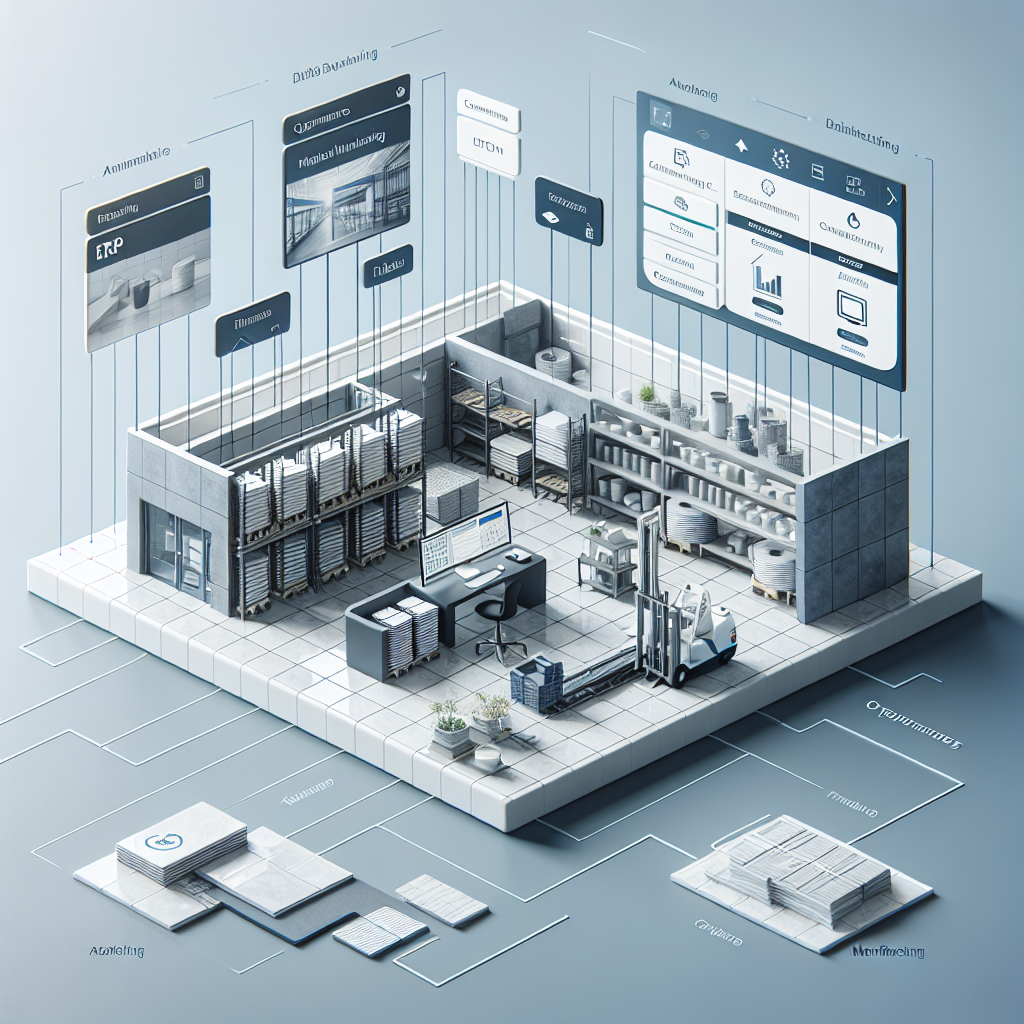
Warehouse operations in the tiles industry are complex due to product weight, fragility, and SKU diversity. Manual processes often lead to inefficiencies and errors.
Warehouse automation for tiles industry operations is now being driven by AI and IoT technologies:
- Automated inventory tracking using barcode and RFID systems
- Intelligent picking and packing processes
- Route optimization for faster deliveries
- Real-time synchronization with ERP and ecommerce platforms
These improvements not only reduce operational costs but also enhance delivery reliability, which is a key competitive differentiator in B2B markets.
Connecting ERP, Ecommerce, and CRM for a Unified Digital Ecosystem
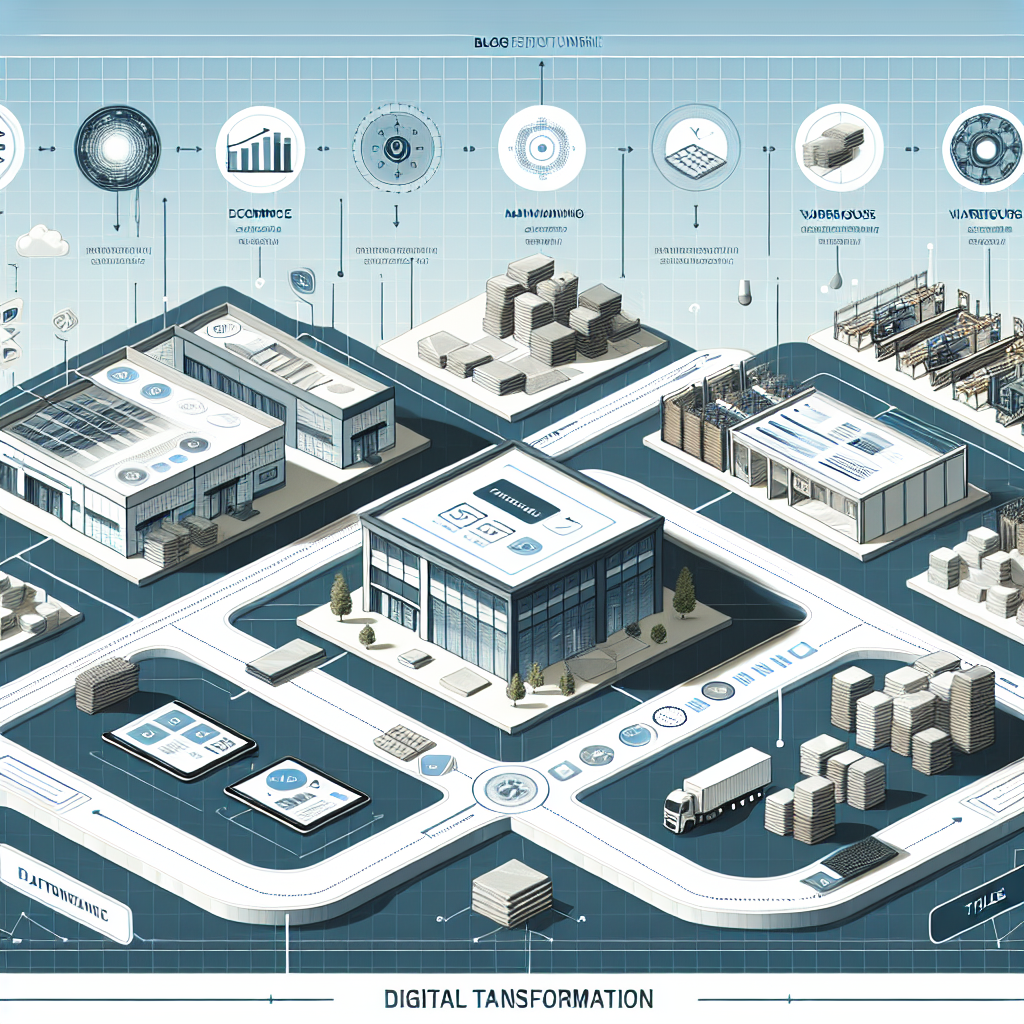
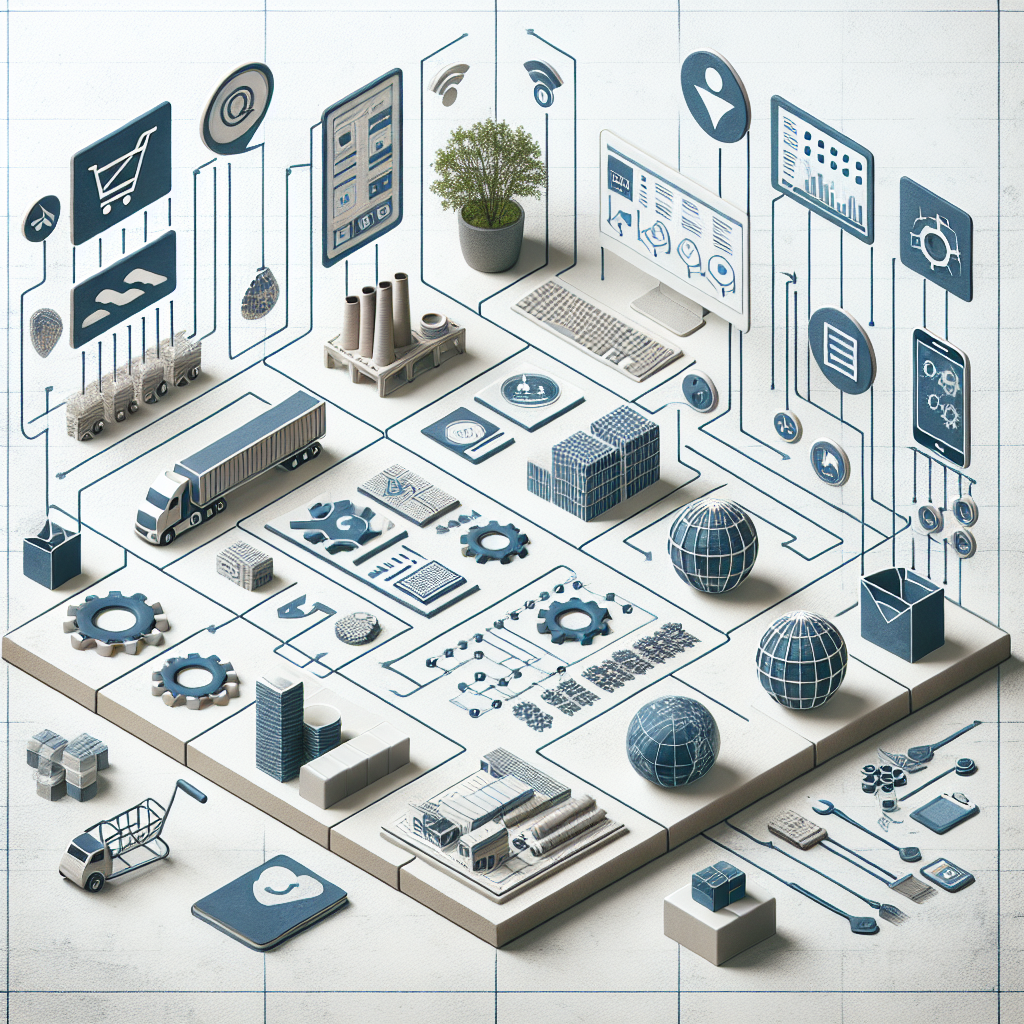
The real transformation happens when ERP, ecommerce platforms, and CRM systems are fully integrated.
In a digitally mature tile business:
- ERP manages production, inventory, and finance
- Ecommerce platforms handle customer transactions and digital storefronts
- CRM systems track customer interactions, preferences, and sales pipelines
This integration enables end-to-end visibility across the business. For example, a bulk order placed through a Magento or Shopify storefront can automatically trigger production planning, inventory allocation, and logistics scheduling within the ERP system.
From a consulting standpoint, this level of integration is what differentiates digitally advanced companies from those still operating in silos.
AI Automation for Manufacturing and Quality Control
AI automation for manufacturing is playing a growing role in improving product consistency and reducing defects.
Applications include:
- Computer vision systems for tile surface inspection
- AI-based anomaly detection in production lines
- Automated quality grading and classification
- Energy consumption optimization in kilns
These technologies are particularly valuable in high-volume production environments where even small efficiency gains translate into significant cost savings.
Digital Transformation Strategy for Tiles Companies
Digital transformation is not just about adopting new tools; it requires a strategic approach aligned with business goals.
Successful tile companies typically follow a phased approach:
- Assessment of current systems and operational gaps
- Selection of scalable ERP and ecommerce platforms
- Integration of data across departments
- Implementation of automation and analytics tools
- Continuous optimization based on performance metrics
A common mistake I see is businesses investing in isolated technologies without a clear integration roadmap. This leads to fragmented systems and limited ROI.
Mid-Content Insight: Leveraging ERP and Ecommerce for Competitive Advantage
Companies investing in ERP for tiles industry operations combined with tiles ecommerce development are gaining a clear competitive edge.
They are able to:
- Launch new product lines faster with synchronized production and sales data
- Expand into global markets through digital B2B channels
- Improve customer retention through personalized experiences
- Reduce operational costs through automation and data-driven decisions
In contrast, businesses relying on manual processes and disconnected systems struggle to scale efficiently.
Global B2B Expansion Through Digital Commerce
The opportunity for global expansion has never been greater. Digital platforms allow tile manufacturers to reach international buyers without traditional distribution barriers.
With the right technology stack:
- Multilingual ecommerce platforms support global customers
- Currency and tax configurations are automated
- International logistics and compliance are streamlined
- Data insights guide market entry strategies
This is where digital transformation for tiles companies becomes a growth engine rather than just an operational upgrade.
Conclusion: Building a Future-Ready Tiles Business
The convergence of AI-powered ERP, predictive analytics, and B2B ecommerce is redefining the tiles and ceramics industry. Businesses that embrace these technologies are not only improving efficiency but also unlocking new revenue streams and global opportunities.
Investing in ERP for tiles industry operations, adopting platforms like Magento for tiles business or Shopify for tiles ecommerce, and leveraging AI automation for manufacturing are no longer optional. They are essential for staying competitive in a rapidly evolving market.
The future belongs to tile companies that can seamlessly integrate manufacturing, distribution, and digital commerce into a unified, intelligent ecosystem.
FAQs
What is the role of ERP in the tiles industry?
ERP systems help tile manufacturers manage production, inventory, procurement, and finance in a centralized platform, improving efficiency and decision-making.
How does AI improve tile manufacturing processes?
AI enhances production planning, quality control, and energy optimization, reducing waste and improving product consistency.
Why is B2B ecommerce important for tile businesses?
B2B ecommerce platforms enable digital ordering, global reach, and better customer experiences, helping businesses scale faster.
Which platforms are best for tiles ecommerce development?
Magento and Shopify are widely used for their scalability, customization, and ability to integrate with ERP and CRM systems.
How can predictive analytics benefit tile distributors?
Predictive analytics helps forecast demand, optimize inventory, and reduce supply chain disruptions, leading to improved profitability.