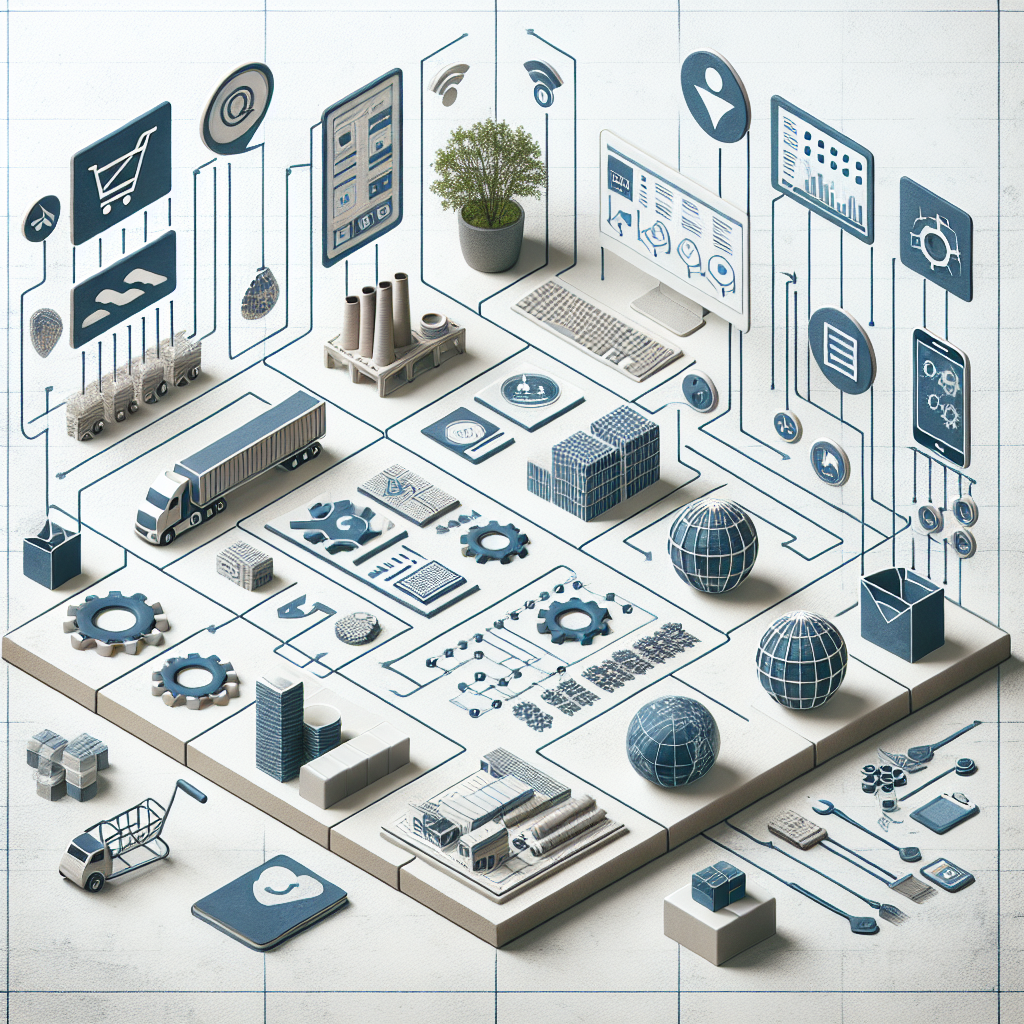
The tiles and ceramics industry is undergoing a structural transformation driven by AI-powered ERP systems, advanced B2B ecommerce platforms, and data-led decision-making. In 2026, manufacturers, distributors, and exporters are no longer competing solely on product quality or pricing. They are competing on operational intelligence, digital agility, and customer experience.
As a consultant working closely with tile manufacturers and building materials companies, I see a clear shift. Businesses investing in ERP for tiles industry operations and scalable tiles ecommerce development are outperforming traditional players across efficiency, inventory control, and global reach.
The Shift from Traditional Operations to Intelligent Manufacturing
Historically, tile manufacturing has been resource-intensive with fragmented systems across production, inventory, and sales. Manual processes often resulted in stock mismatches, delayed shipments, and inconsistent customer communication.
AI-powered ERP systems are changing this landscape by integrating every operational layer into a unified digital ecosystem. Platforms such as Odoo ERP for manufacturing are enabling real-time production monitoring, predictive maintenance, and demand forecasting.
Key outcomes include:
- Real-time visibility into raw material consumption and production cycles
- AI-based demand forecasting to reduce overproduction
- Automated quality control alerts during manufacturing
- Improved coordination between factory floors and distribution teams
This shift allows tile manufacturers to reduce operational waste while improving production efficiency and profitability.
B2B Ecommerce: The New Growth Engine for Tile Businesses
The global tile market is increasingly moving toward digital commerce. Traditional sales channels involving dealers, showrooms, and manual order booking are being replaced by B2B ecommerce platforms designed specifically for bulk buyers, architects, and distributors.
Solutions like Magento for tiles business and Shopify for tiles ecommerce are empowering companies to build robust digital catalogs, enable custom pricing for dealers, and streamline bulk order management.
Modern tiles ecommerce development focuses on:
- Dynamic pricing based on customer segments
- Real-time inventory integration with ERP systems
- Visual product catalogs with high-resolution tile previews
- Seamless order placement for international buyers
For exporters, this means reduced dependency on intermediaries and faster access to global markets.
AI Automation in Supply Chain and Warehouse Operations
One of the most impactful applications of AI automation for manufacturing is in warehouse and logistics management. Tile businesses often deal with heavy inventory, multiple SKUs, and complex dispatch planning.
Warehouse automation for tiles industry operations is now leveraging AI to optimize storage, picking, and dispatch processes.
Practical implementations include:
- AI-driven inventory allocation based on order priority
- Automated picking routes to reduce handling time
- Smart palletization for minimizing breakage
- Integration with transport systems for real-time shipment tracking
These advancements significantly reduce fulfillment errors and improve delivery timelines, which is critical in B2B transactions.
Data-Driven Decision Making with Integrated ERP and CRM
Modern ERP systems are no longer just operational tools. When integrated with CRM automation, they become powerful decision-making engines.
Tile businesses can now track customer behavior, buying patterns, and regional demand trends in real time. This allows sales and marketing teams to personalize engagement strategies and improve conversion rates.
For example:
- Identifying high-demand tile designs across regions
- Offering targeted promotions to dealers based on purchase history
- Predicting seasonal demand fluctuations
- Aligning production planning with sales forecasts
This level of intelligence transforms reactive businesses into proactive, data-driven organizations.
Digital Transformation Strategies for Scalable Growth
Digital transformation for tiles companies is not just about adopting new tools. It requires a strategic approach aligned with long-term business goals.
From my experience, successful companies follow a phased implementation strategy:
- Start with ERP implementation to centralize operations
- Integrate B2B ecommerce platforms for digital sales expansion
- Implement AI automation in production and warehouse processes
- Use analytics and dashboards for continuous optimization
Companies that attempt to digitize everything at once often face resistance and operational disruption. A structured approach ensures smoother adoption and measurable ROI.
Enhancing Customer Experience in a Competitive Market
In 2026, customer experience is a key differentiator in the tiles industry. Buyers expect transparency, speed, and convenience at every touchpoint.
Digital platforms are enabling:
- Instant access to product availability
- Faster quotation and order processing
- Real-time shipment updates
- Consistent communication across channels
A well-integrated system combining tiles ecommerce development with ERP ensures that customers receive accurate information and reliable service, strengthening long-term relationships.
Global Export Expansion Through Digital Ecosystems
Export-oriented tile manufacturers are among the biggest beneficiaries of digital transformation. AI-powered ERP systems combined with B2B ecommerce platforms simplify compliance, documentation, and international order management.
Businesses can:
- Manage multi-currency transactions seamlessly
- Automate export documentation workflows
- Track global shipments in real time
- Expand into new markets without physical presence
This creates a scalable model for international growth while reducing operational complexity.
The Competitive Advantage of Early Adoption
The gap between digitally mature companies and traditional players is widening rapidly. Businesses that embrace AI automation for manufacturing, ERP integration, and ecommerce early are building strong competitive advantages.
They are able to:
- Respond faster to market changes
- Optimize costs across the value chain
- Deliver superior customer experiences
- Scale operations without proportional cost increases
On the other hand, companies relying on manual processes risk losing relevance in an increasingly digital marketplace.
Conclusion
The convergence of AI-powered ERP, B2B ecommerce platforms, and automation technologies is reshaping the tiles and ceramics industry. From production floors to global exports, every aspect of the business is becoming more intelligent, connected, and scalable.
For tile manufacturers, distributors, and exporters, the opportunity is clear. Investing in ERP for tiles industry operations, adopting platforms like Magento for tiles business or Shopify for tiles ecommerce, and leveraging warehouse automation for tiles industry processes are no longer optional.
They are essential for staying competitive in a rapidly evolving digital economy. Companies that act now will not only improve efficiency but also unlock new revenue streams and global growth opportunities.
FAQs
1. How does ERP benefit tile manufacturing companies?
ERP systems centralize production, inventory, sales, and finance, enabling real-time visibility, better planning, and reduced operational inefficiencies.
2. Why is B2B ecommerce important for the tiles industry?
B2B ecommerce allows tile businesses to reach global buyers, automate bulk orders, offer dynamic pricing, and reduce dependency on traditional sales channels.
3. Which platforms are best for tiles ecommerce development?
Magento for tiles business and Shopify for tiles ecommerce are popular choices due to their scalability, customization, and integration capabilities.
4. How is AI used in tile manufacturing and warehouse operations?
AI helps in demand forecasting, predictive maintenance, automated inventory management, and optimizing warehouse operations for faster and error-free fulfillment.
5. What is the first step in digital transformation for tiles companies?
The first step is implementing an ERP system to centralize operations, followed by integrating ecommerce platforms and automation tools for scalable growth.