
The ceramic tiles industry has evolved rapidly over the last decade, yet many manufacturers and distributors still struggle with fragmented systems, inconsistent inventory data, and inefficient dealer order management. As competition intensifies and customer expectations rise, relying on manual processes or disconnected software is no longer sustainable.
From my experience working with tiles manufacturers and distributors, the root cause of operational inefficiencies often lies in the lack of integration between ERP systems, CRM platforms, and B2B ecommerce solutions. Businesses that invest in tiles ecommerce development alongside ERP for tiles industry operations are seeing measurable improvements in inventory control, order accuracy, and revenue growth.
Understanding the Inventory Chaos in the Tiles Industry
Tiles businesses deal with complex inventory structures. Variants such as size, finish, texture, color, and batch consistency create a highly dynamic inventory environment. Without a centralized system, this leads to:
• Inaccurate stock visibility across warehouses and showrooms
• Frequent stockouts or overstocking
• Difficulty in managing batch-wise inventory
• Delayed dealer order fulfillment
In many cases, sales teams rely on outdated spreadsheets or disconnected systems. This results in overpromising to dealers, order cancellations, and loss of trust.
The Role of ERP in Streamlining Tile Manufacturing and Inventory
A robust ERP for tiles industry operations acts as the backbone of digital transformation. Systems like Odoo ERP for manufacturing are particularly effective because they integrate production, inventory, procurement, and finance into a single platform.
With ERP implementation, tiles businesses can:
• Track real-time inventory across multiple warehouses
• Manage batch and lot numbers for consistent quality control
• Automate production planning based on demand forecasts
• Reduce manual errors in stock reconciliation
For example, a mid-sized tiles manufacturer we advised reduced inventory discrepancies by over 40 percent within six months of ERP implementation. The key was real-time synchronization between production and warehouse data.
However, ERP alone is not enough. The real transformation happens when ERP is connected with ecommerce and CRM systems.
Bridging the Gap with B2B eCommerce Platforms
Modern buyers, including dealers and distributors, expect a seamless digital ordering experience. This is where tiles ecommerce development plays a critical role.
Platforms like Magento for tiles business and Shopify for tiles ecommerce enable manufacturers to create dedicated B2B portals where dealers can:
• View real-time stock availability
• Access personalized pricing and credit limits
• Place bulk orders بسهولة and track order status
• Download invoices and manage order history
When integrated with ERP, these platforms eliminate the need for manual order entry. Orders placed on the ecommerce platform are automatically pushed to the ERP system for processing.
This integration ensures:
• Zero duplication of data
• Faster order processing
• Improved dealer satisfaction
• Reduced operational workload
In one implementation, a tiles distributor reduced order processing time from 24 hours to under 2 hours by integrating Magento with their ERP system.
CRM Automation for Dealer Relationship Management
While ERP manages operations and ecommerce handles transactions, CRM systems focus on relationships. In the tiles industry, where dealer networks are critical, CRM automation becomes a strategic advantage.
An integrated CRM system allows businesses to:
• Track dealer interactions and purchase history
• Automate follow-ups and sales reminders
• Manage credit limits and payment cycles
• Analyze dealer performance and sales trends
When CRM is connected with ERP and ecommerce platforms, sales teams gain a 360-degree view of each dealer. This enables more informed decision-making and personalized engagement.
For instance, if a dealer frequently orders specific tile categories, the system can automatically suggest promotions or restocking alerts, improving both sales and customer experience.
Warehouse Automation and Real-Time Visibility
Warehouse operations in the tiles industry are often labor-intensive and prone to errors. Implementing warehouse automation for tiles industry operations significantly improves efficiency.
Key benefits include:
• Barcode and RFID-based inventory tracking
• Automated stock updates during inward and outward movements
• Optimized warehouse layout and picking processes
• Reduced handling errors and damage
When warehouse systems are integrated with ERP, inventory data is updated in real time and reflected instantly on the ecommerce platform. This ensures that dealers always see accurate stock levels.
A large tiles exporter we worked with improved order accuracy by 30 percent after implementing warehouse automation integrated with their ERP system.
End-to-End Integration: The Real Game Changer
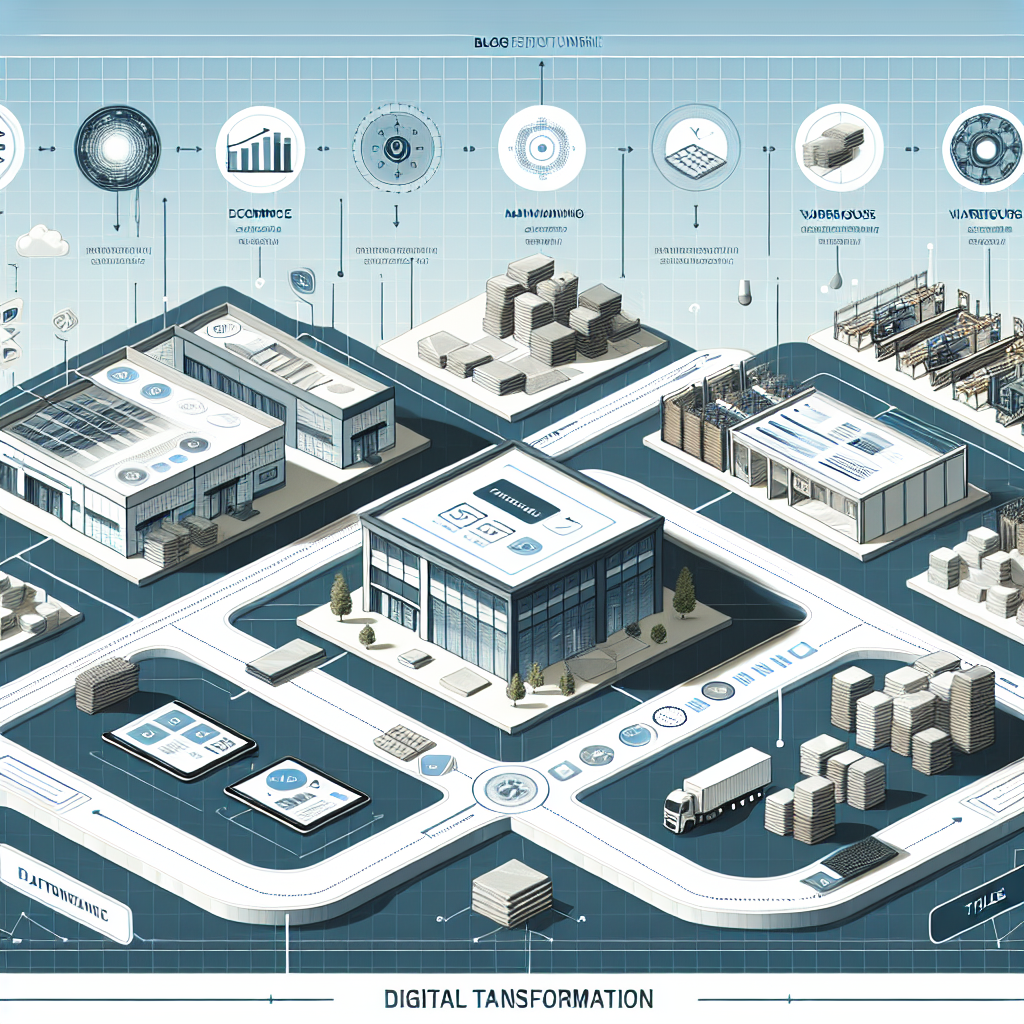
The true value lies in integrating ERP, CRM, and B2B ecommerce into a unified ecosystem. This end-to-end integration transforms how tiles businesses operate.
Instead of siloed systems, businesses gain:
• A single source of truth for all data
• Seamless flow of information across departments
• Faster decision-making based on real-time insights
• Scalable infrastructure for future growth
For CTOs and operations managers, this means fewer system conflicts, reduced IT overhead, and better control over business processes.
For business owners, it translates into higher profitability, improved customer retention, and the ability to scale without operational bottlenecks.
Practical Implementation Approach
Digital transformation does not happen overnight. A phased approach is essential for successful implementation:
• Start with ERP modernization if legacy systems are outdated
• Introduce B2B ecommerce platforms tailored for dealer networks
• Integrate CRM for sales and relationship management
• Gradually implement warehouse automation
Choosing the right technology stack is critical. Solutions like Odoo ERP for manufacturing combined with Magento for tiles business or Shopify for tiles ecommerce can be customized to meet specific operational needs.
Equally important is change management. Training teams and aligning processes with new systems ensures long-term success.
Conclusion
Inventory chaos and inefficient dealer order management are not just operational issues; they are barriers to growth in the tiles industry. Businesses that continue to rely on disconnected systems risk falling behind in an increasingly digital marketplace.
By integrating ERP for tiles industry operations with CRM automation and advanced tiles ecommerce development, companies can achieve real-time visibility, streamline operations, and deliver superior dealer experiences.
The combination of ERP, Magento or Shopify ecommerce platforms, and warehouse automation for tiles industry processes creates a powerful digital ecosystem. This not only resolves current challenges but also positions businesses for scalable, sustainable growth.
For decision-makers, the message is clear: integration is no longer optional. It is the foundation of a modern, competitive tiles business.