
The tiles and ceramic industry is undergoing a structural shift in 2026, driven by AI-powered ERP systems, predictive analytics, and the rapid growth of tiles ecommerce development. Traditional manufacturing and distribution models are no longer sufficient to meet global demand, fluctuating raw material costs, and increasingly digital buyer expectations.
From my experience advising tile manufacturers and distributors, the companies leading this transformation are those investing in integrated digital ecosystems. These include ERP for tiles industry operations, AI automation for manufacturing, and scalable ecommerce platforms such as Magento for tiles business and Shopify for tiles ecommerce.
This convergence of technologies is not just improving efficiency—it is redefining how tile businesses operate, sell, and scale globally.
The Evolution of ERP in the Tiles Industry
ERP systems in the ceramic sector have moved far beyond basic inventory and accounting functions. Modern solutions like Odoo ERP for manufacturing now act as the central intelligence hub of operations.
AI-powered ERP platforms enable:
- Real-time production monitoring across multiple plants
- Automated demand forecasting based on historical and market data
- Intelligent procurement planning to reduce raw material waste
- Integrated CRM for managing dealer and distributor networks
For tile manufacturers dealing with high SKU complexity, shade variations, and batch inconsistencies, ERP systems provide much-needed operational visibility.
More importantly, predictive analytics embedded within ERP platforms helps businesses anticipate production bottlenecks and adjust schedules proactively—something that was nearly impossible with legacy systems.
Predictive Analytics in Manufacturing and Supply Chain
One of the most impactful developments in 2026 is the use of predictive analytics across manufacturing and distribution.
Instead of reacting to problems, tile companies can now predict:
- Equipment failures through sensor data and AI models
- Demand fluctuations across regions and product categories
- Optimal inventory levels for warehouses and distributors
- Logistics delays and route inefficiencies
For example, a mid-sized ceramic manufacturer I worked with reduced downtime by over 20 percent by implementing AI-based machine maintenance alerts. Similarly, predictive demand planning helped them optimize kiln usage and reduce energy costs significantly.
When combined with warehouse automation for tiles industry operations, predictive analytics ensures faster order fulfillment and reduced carrying costs.
The Rise of Tiles Ecommerce and Digital Commerce Platforms
The global shift toward digital buying behavior has accelerated the adoption of tiles ecommerce development. B2B buyers, including architects, contractors, and retailers, now expect seamless online purchasing experiences.
Modern ecommerce platforms such as Magento for tiles business and Shopify for tiles ecommerce are enabling:
- Real-time inventory visibility across warehouses
- Dynamic pricing for bulk and distributor orders
- Advanced product filtering for size, finish, and application
- Integration with ERP systems for order processing and invoicing
This integration between ecommerce and ERP is critical. Without it, businesses risk data silos, order inaccuracies, and delayed fulfillment.
In 2026, leading tile brands are creating unified digital commerce ecosystems where customers can browse, visualize, and order products online while backend systems automatically manage inventory, logistics, and billing.
AI Automation Across Production and Operations
AI automation for manufacturing is no longer limited to robotics on production lines. It now extends across the entire value chain.
Key applications include:
- Automated quality inspection using computer vision
- AI-driven glaze and color consistency analysis
- Production scheduling optimization based on demand forecasts
- Intelligent energy management for kilns and machinery
These technologies are particularly valuable in the tiles industry, where even minor inconsistencies can impact product quality and customer satisfaction.
AI also plays a significant role in customer-facing processes. CRM automation integrated with ERP systems enables personalized communication, order tracking, and after-sales support for distributors and dealers.
Warehouse and Distribution Transformation
Global distribution in the tiles industry has become more complex, especially with the rise of exports and multi-channel sales.
Warehouse automation for tiles industry operations is helping businesses:
- Improve picking and packing efficiency
- Reduce manual errors in order fulfillment
- Optimize storage for heavy and fragile products
- Enable faster turnaround times for ecommerce orders
When connected with ERP and ecommerce platforms, warehouses become intelligent distribution centers capable of handling both bulk B2B orders and smaller direct-to-customer shipments.
For example, automated warehouse systems integrated with ERP can prioritize urgent orders, allocate stock dynamically, and trigger replenishment workflows without manual intervention.
Mid-Content Insight: Connecting ERP, Ecommerce, and AI
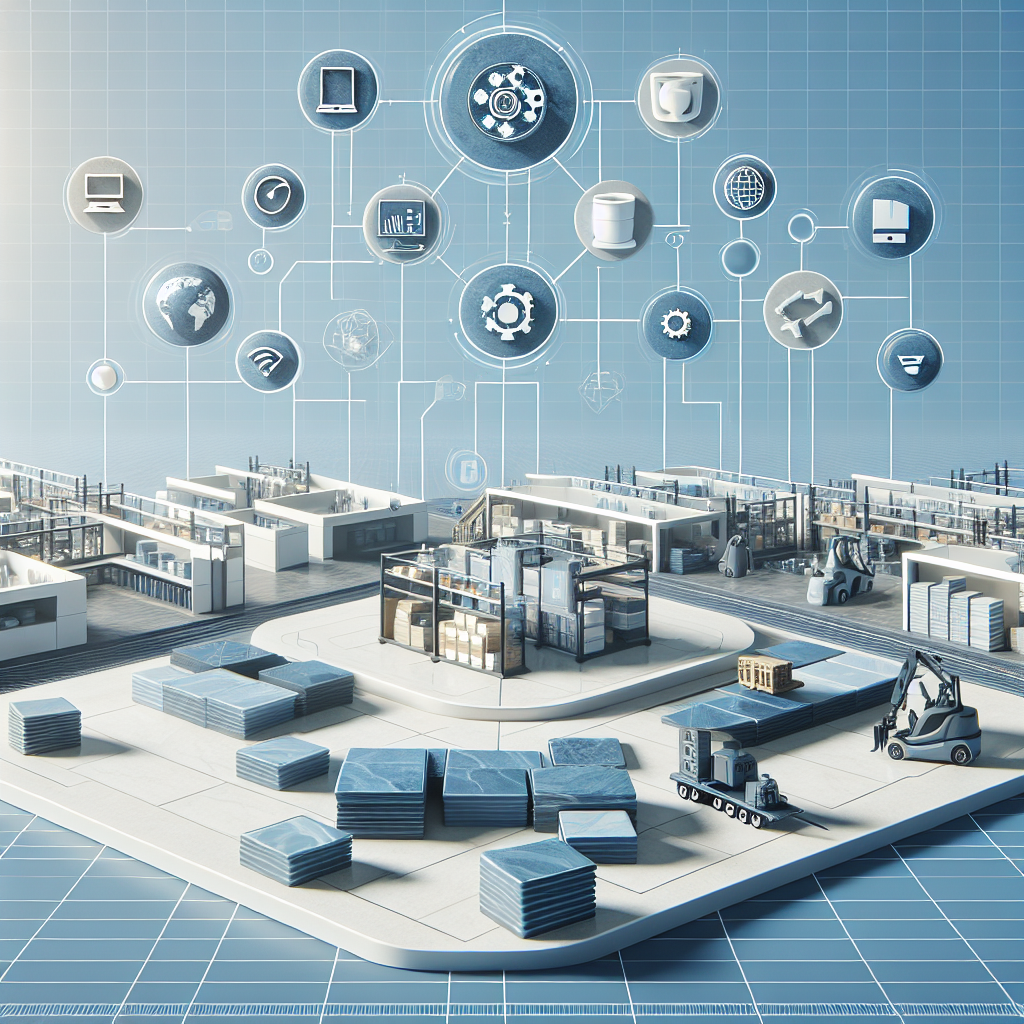
The real transformation happens when ERP for tiles industry operations, ecommerce platforms, and AI analytics are fully integrated.
This unified approach enables:
- End-to-end visibility from production to customer delivery
- Data-driven decision-making across departments
- Faster response to market trends and customer demands
- Scalable infrastructure for global expansion
Tile companies that invest in this integration are better positioned to compete in both domestic and international markets.
Whether it’s deploying Odoo ERP for manufacturing or building a Magento-based tiles ecommerce platform, the goal is to create a connected ecosystem where data flows seamlessly and decisions are automated wherever possible.
Challenges and Strategic Considerations
Despite the clear benefits, digital transformation in the tiles industry comes with challenges.
Common issues include:
- Resistance to change from traditional operational teams
- Poor data quality affecting AI and analytics outcomes
- Lack of integration between legacy systems
- Underestimating the complexity of ERP implementation
To address these challenges, businesses should adopt a phased approach. Start with core ERP implementation, followed by ecommerce integration, and then layer AI capabilities on top.
Choosing the right technology partner is equally important. Industry-specific expertise in tiles ecommerce development and ERP for tiles industry operations can significantly reduce implementation risks.
Conclusion
The tiles and ceramic industry in 2026 is being reshaped by AI-powered ERP systems, predictive analytics, and digital commerce platforms.
Businesses that embrace these technologies are achieving higher efficiency, better customer experiences, and stronger global competitiveness.
From implementing Odoo ERP for manufacturing to launching scalable Shopify for tiles ecommerce or Magento-based platforms, the focus must be on building an integrated, data-driven ecosystem.
Digital transformation for tiles companies is no longer optional—it is a strategic necessity. Those who act now will lead the market, while others risk falling behind in an increasingly automated and digitally connected world.
FAQs
What is the role of AI in tiles manufacturing?
AI helps optimize production, predict equipment failures, improve quality control, and enhance demand forecasting in tiles manufacturing.
Which ERP is best for the tiles industry?
Solutions like Odoo ERP for manufacturing are highly effective due to their flexibility, scalability, and ability to integrate with ecommerce and analytics tools.
Why is ecommerce important for tile businesses?
Tiles ecommerce development enables businesses to reach global customers, streamline ordering processes, and provide a better buying experience for B2B and B2C clients.
How does predictive analytics improve supply chain efficiency?
Predictive analytics helps forecast demand, optimize inventory, reduce downtime, and improve logistics planning, leading to cost savings and faster delivery.
What are the benefits of integrating ERP with ecommerce platforms?
Integration ensures real-time data synchronization, accurate order processing, better inventory management, and improved customer satisfaction.