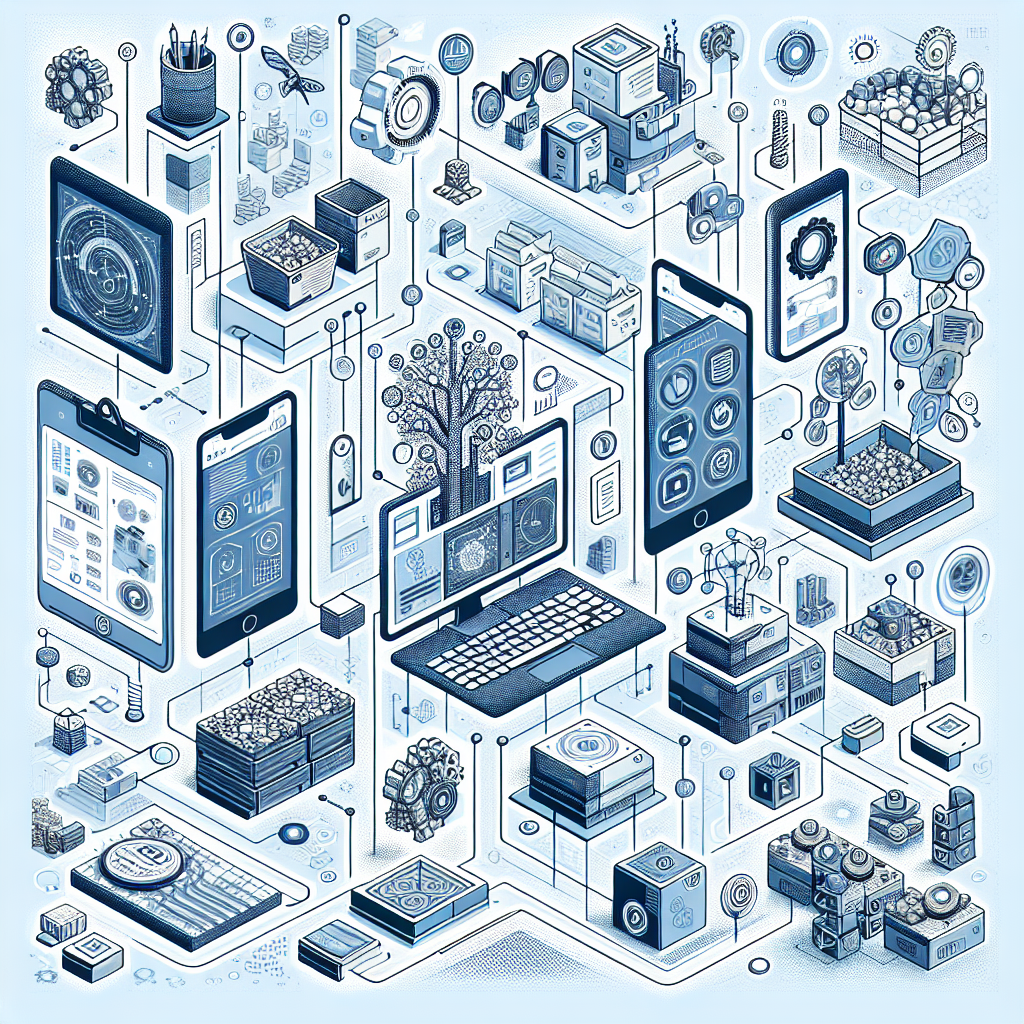


The ceramic tile industry is experiencing a major shift driven by digital transformation, supply chain automation, and data-driven decision making. Manufacturers that once relied heavily on manual planning, spreadsheets, and reactive production strategies are now adopting AI-powered demand forecasting and ERP-driven operations to stay competitive in a rapidly evolving market.
Rising global demand, volatile raw material costs, and changing customer expectations are pushing tile manufacturers to rethink traditional operations. Today, companies that integrate ERP for manufacturing, predictive analytics, and B2B ecommerce platforms are gaining a significant advantage in production planning, inventory management, and customer service.
For business leaders, CTOs, and operations managers in the ceramic tile industry, adopting intelligent technologies is no longer optional. It is becoming essential for operational efficiency, scalability, and sustainable growth.
The Challenge of Demand Uncertainty in Tile Manufacturing
Ceramic tile production is capital intensive and highly dependent on accurate demand planning. Overproduction results in excess inventory and warehouse costs, while underproduction leads to lost sales opportunities and supply chain disruptions.
Several factors make forecasting particularly difficult in this industry:
- Seasonal construction demand fluctuations
- Regional market variations
- Distributor and dealer purchasing patterns
- Long production cycles and kiln scheduling constraints
- Global supply chain uncertainties
Traditional forecasting methods based on historical averages or manual estimates often fail to capture these dynamic market signals. This is where AI-powered demand forecasting integrated with modern ERP systems becomes a powerful solution.
How AI-Powered Demand Forecasting Improves Production Planning
Artificial intelligence and predictive analytics allow manufacturers to analyze large datasets from multiple sources, including historical sales, distributor orders, ecommerce transactions, market trends, and macroeconomic indicators.
Instead of static planning models, AI continuously learns from new data to generate highly accurate forecasts.
For ceramic tile manufacturers, this enables:
- Accurate demand prediction across regions and product categories
- Optimized production scheduling for kilns and manufacturing lines
- Reduced stockouts and excess inventory
- Faster response to market demand shifts
- Improved coordination between sales, production, and logistics
When integrated with ERP for manufacturing, these AI insights automatically inform production planning, procurement decisions, and warehouse operations.
The Role of ERP Systems in Smart Manufacturing Operations
Enterprise Resource Planning systems act as the digital backbone of modern manufacturing organizations. Platforms such as Odoo ERP for manufacturing enable companies to connect every operational function into a unified system.
For ceramic tile manufacturers, ERP systems centralize data across:
- Production planning and manufacturing execution
- Raw material procurement and supplier management
- Inventory and warehouse management systems
- Sales and distributor order processing
- Financial and operational reporting
This unified data environment allows predictive analytics tools to work effectively, providing decision-makers with real-time operational visibility.
For example, when AI forecasts a surge in demand for a specific tile design, the ERP system can automatically trigger raw material procurement, adjust production schedules, and update inventory targets.
This level of operational synchronization dramatically improves efficiency and reduces planning errors.
Smart Inventory Management with Predictive Analytics
Inventory management is one of the most complex challenges in tile manufacturing due to the large number of SKUs, finishes, sizes, and design variations.
Smart inventory systems powered by predictive analytics help manufacturers maintain optimal stock levels across warehouses and distribution channels.
Key advantages include:
- Real-time visibility of inventory across multiple warehouses
- Automated reorder points based on demand forecasts
- Reduction of dead stock and obsolete designs
- Faster order fulfillment for distributors and retailers
- Improved warehouse automation and logistics planning
When combined with modern warehouse automation systems, manufacturers can streamline picking, packing, and shipping operations while reducing manual errors.
Integrating B2B Ecommerce Platforms with ERP
The global shift toward B2B digital commerce is also reshaping the ceramic tile industry. Dealers, distributors, and construction companies increasingly expect seamless digital ordering experiences.
Modern B2B ecommerce development platforms such as Shopify B2B ecommerce and Magento B2B ecommerce allow manufacturers to build online portals where customers can:
- Browse product catalogs and tile collections
- Check real-time inventory availability
- Place bulk orders online
- Track shipments and order status
- Access pricing and distributor discounts
When integrated with ERP systems, ecommerce orders automatically update inventory, trigger production workflows, and synchronize customer data through CRM automation.
This integration not only improves operational efficiency but also enhances the customer experience, making it easier for distributors and retailers to do business with the manufacturer.
The Industry 4.0 Opportunity for Ceramic Tile Manufacturers
Industry 4.0 technologies are bringing unprecedented visibility and intelligence to manufacturing operations.
For ceramic tile manufacturers, the convergence of AI automation, ERP systems, and data analytics platforms is enabling smarter factories with highly optimized workflows.
Some of the most impactful technologies include:
- AI-driven demand forecasting models
- ERP-integrated manufacturing planning systems
- IoT-enabled equipment monitoring for kilns and production lines
- Warehouse automation systems for inventory movement
- Data analytics platforms for operational insights
- B2B ecommerce platforms for digital distributor engagement
Together, these technologies allow companies to transition from reactive operations to predictive and data-driven decision making.
Organizations that adopt these systems early gain a competitive advantage in cost efficiency, responsiveness, and customer satisfaction.
A Strategic Path Toward Digital Transformation
Successful digital transformation in manufacturing does not happen overnight. It requires a structured approach that aligns technology adoption with business goals.
Manufacturing leaders should focus on several strategic steps:
- Implement an integrated ERP for manufacturing to unify operations
- Use AI-powered demand forecasting to improve planning accuracy
- Modernize sales channels with B2B ecommerce development
- Introduce warehouse automation systems for inventory efficiency
- Leverage data analytics platforms for real-time operational insights
By building a connected digital ecosystem, ceramic tile manufacturers can scale operations while maintaining agility in a competitive market.
Conclusion
The future of ceramic tile manufacturing lies in intelligent, data-driven operations powered by AI automation, ERP systems, and digital commerce platforms.
Companies that embrace AI-powered demand forecasting, predictive inventory management, and integrated B2B ecommerce platforms will be better positioned to navigate demand volatility, streamline supply chains, and deliver superior customer experiences.
For industrial businesses seeking long-term growth, digital transformation is not simply a technology upgrade. It is a strategic investment that enables smarter manufacturing, improved operational efficiency, and stronger market competitiveness.
As Industry 4.0 continues to reshape global manufacturing, organizations that integrate ERP-driven operations, warehouse automation systems, and advanced analytics will lead the next generation of smart industrial enterprises.
FAQs
What is AI-powered demand forecasting in manufacturing?
AI-powered demand forecasting uses machine learning and predictive analytics to analyze historical sales data, market trends, and customer behavior to predict future product demand more accurately.
How does ERP help ceramic tile manufacturers manage operations?
ERP for manufacturing integrates production planning, inventory management, procurement, sales, and financial systems into a centralized platform, improving operational visibility and efficiency.
Why is smart inventory management important for tile manufacturers?
Smart inventory systems help manufacturers maintain optimal stock levels, reduce excess inventory, improve warehouse efficiency, and ensure faster order fulfillment for distributors and retailers.
How do B2B ecommerce platforms benefit ceramic tile manufacturers?
B2B ecommerce platforms allow manufacturers to offer digital ordering portals for distributors and dealers, enabling real-time inventory access, automated order processing, and improved customer experience.
What technologies are driving digital transformation in manufacturing?
Key technologies include AI automation, ERP systems, B2B ecommerce platforms, CRM automation, warehouse automation systems, IoT-enabled equipment monitoring, and advanced data analytics platforms.