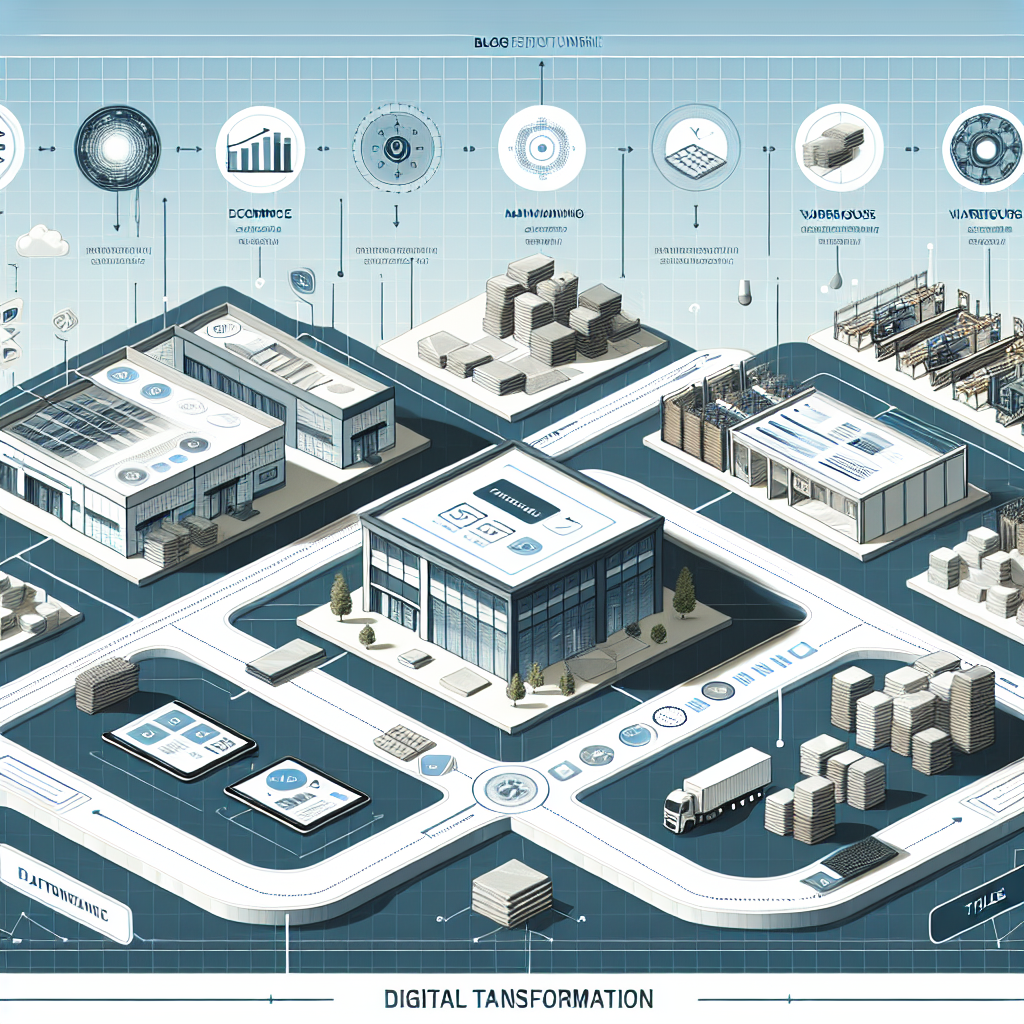


The ceramic tile industry is entering a new era defined by automation, real-time data, and digital commerce. As global competition intensifies and customer expectations evolve, tile manufacturers, distributors, and exporters are increasingly turning to AI-powered ERP systems and predictive analytics to modernize operations.
For many tile businesses, the traditional model of manual planning, disconnected systems, and reactive decision-making is no longer sustainable. Industry 4.0 technologies are enabling ceramic manufacturers to integrate production, inventory, sales, and B2B ecommerce into a unified digital ecosystem.
From implementing ERP for tiles industry operations to launching scalable tiles ecommerce development platforms using Magento or Shopify, companies are discovering new ways to optimize production efficiency, improve supply chain visibility, and accelerate global B2B sales.
The shift toward data-driven operations is not simply a technology upgrade. It represents a strategic transformation in how tile companies manufacture, distribute, and sell their products worldwide.
The Industry 4.0 Shift in Ceramic Tile Manufacturing
Ceramic tile manufacturing involves complex processes including raw material management, kiln scheduling, quality inspection, packaging, and global distribution. Traditionally, these processes have been managed through siloed systems or manual coordination.
Industry 4.0 introduces a connected operational environment where machines, ERP systems, warehouses, and ecommerce platforms share data in real time.
With modern ERP platforms such as Odoo ERP for manufacturing, tile businesses can centralize operations across production plants, warehouses, and sales teams.
This transformation enables companies to:
- Monitor production performance across multiple manufacturing lines
- Track raw material consumption and wastage in real time
- Predict equipment maintenance before breakdowns occur
- Align production planning with real-time sales demand
- Automate order processing across B2B ecommerce platforms
The result is a manufacturing environment that is more efficient, transparent, and scalable.
The Role of AI-Powered ERP in the Tiles Industry
AI-powered ERP systems are becoming the operational backbone for forward-thinking tile manufacturers. Unlike traditional ERP solutions, modern platforms combine automation, predictive intelligence, and integrated business workflows.
An advanced ERP for tiles industry operations connects critical departments such as production planning, inventory management, finance, procurement, and B2B order management.
AI enhances ERP systems by analyzing historical production data, customer purchasing patterns, and logistics performance.
This enables predictive decision-making such as:
- Forecasting tile demand across regions and export markets
- Optimizing kiln schedules and manufacturing batches
- Identifying slow-moving inventory across warehouses
- Automating procurement for raw materials like clay, feldspar, and glaze
- Detecting operational inefficiencies in manufacturing workflows
For large ceramic manufacturers exporting to multiple countries, these insights reduce operational risk and significantly improve planning accuracy.
Predictive Analytics for Smarter Production and Supply Chains
Predictive analytics is one of the most powerful technologies transforming tile manufacturing and distribution.
Using AI models trained on production and sales data, tile businesses can anticipate future trends rather than reacting to past outcomes.
In a real-world scenario, a tile manufacturer supplying distributors across North America, Europe, and the Middle East can use predictive analytics to forecast demand by product category, size, and finish.
This allows production teams to align manufacturing schedules with real market demand.
Key benefits include:
- Reduced overproduction and inventory carrying costs
- Improved warehouse utilization
- Faster order fulfillment for B2B buyers
- Reduced shipping delays and logistics bottlenecks
- Improved profitability through optimized production planning
When combined with warehouse automation for tiles industry logistics, predictive analytics enables highly efficient distribution networks capable of supporting global B2B growth.
The Rise of B2B Ecommerce Platforms for Tile Businesses
Global tile buyers increasingly expect the same digital purchasing experience they receive in consumer ecommerce.
Distributors, architects, contractors, and retailers want the ability to browse product catalogs, check inventory availability, view pricing tiers, and place bulk orders online.
This is where tiles ecommerce development plays a critical role in modernizing sales channels.
Leading tile companies are deploying robust B2B ecommerce platforms powered by Magento for tiles business or Shopify for tiles ecommerce stores.
These platforms integrate directly with ERP systems, creating a seamless digital sales infrastructure.
Capabilities often include:
- Real-time inventory synchronization from ERP
- Automated B2B pricing and dealer-specific discounts
- Online bulk ordering and quick reorder functionality
- Digital product catalogs with high-resolution tile visuals
- CRM integration for sales automation and lead management
For exporters, these platforms eliminate friction in the international sales process and enable 24/7 global order placement.
Integrating CRM, ERP, and Ecommerce for End-to-End Digital Operations
True digital transformation occurs when ERP, CRM, and ecommerce platforms work together as a unified system.
Tile companies that integrate these technologies gain complete visibility into the customer journey, from initial inquiry to final order fulfillment.
For example, when a distributor places an order through a B2B ecommerce portal:
- The order automatically syncs with the ERP system
- Inventory availability is validated in real time
- Warehouse teams receive automated picking instructions
- Shipping and logistics are scheduled through integrated workflows
- Customer communication is managed through CRM automation
This level of integration dramatically reduces manual intervention while improving operational speed and accuracy.
For growing tile businesses, this digital infrastructure becomes the foundation for scaling into new markets.
AI Automation and Smart Warehousing in Tile Distribution
Tile distribution involves heavy inventory, multiple SKUs, and complex warehouse operations. AI automation is helping businesses streamline these processes.
Modern warehouse automation for tiles industry logistics includes intelligent inventory tracking, automated picking systems, and real-time warehouse analytics.
When integrated with ERP and predictive analytics, warehouse systems can automatically recommend stock replenishment and optimize storage layouts.
Benefits include:
- Faster pallet picking and order preparation
- Reduced manual handling errors
- Improved warehouse space utilization
- Accurate stock visibility across locations
- Faster fulfillment for ecommerce and B2B orders
For companies managing multiple warehouses or export hubs, these efficiencies translate directly into lower operational costs and improved customer satisfaction.
The Competitive Advantage of Digital Transformation in the Tile Industry
The global ceramic tile market is becoming increasingly competitive as manufacturers expand internationally and distributors adopt digital procurement channels.
Companies that invest in digital transformation are positioning themselves to outperform traditional competitors.
By implementing technologies such as Odoo ERP for manufacturing, AI-driven predictive analytics, CRM automation, and scalable tiles ecommerce development platforms, tile businesses gain the agility needed to respond to market changes.
More importantly, these systems create a data-driven culture where strategic decisions are supported by real-time insights rather than assumptions.
In an industry where margins can be tight and logistics complex, this competitive advantage can determine long-term success.
Conclusion
The ceramic tile industry is rapidly evolving under the influence of Industry 4.0 technologies. AI-powered ERP systems, predictive analytics, and integrated B2B ecommerce platforms are transforming how tile manufacturers operate and compete in global markets.
Forward-looking companies are no longer viewing ERP implementation or ecommerce development as isolated technology projects. Instead, they are building unified digital ecosystems that connect manufacturing, warehousing, sales, and customer engagement.
Whether through ERP for tiles industry operations, Magento for tiles business platforms, Shopify for tiles ecommerce solutions, or Odoo ERP for manufacturing environments, the future belongs to tile companies that embrace intelligent automation and data-driven decision-making.
Businesses that invest in these technologies today will not only streamline operations but also unlock new growth opportunities in the expanding global construction and building materials market.
FAQs
1. Why is ERP important for the tiles and ceramic manufacturing industry?
ERP systems centralize operations such as production planning, inventory management, finance, and order processing. This improves efficiency, visibility, and decision-making across the entire tile manufacturing process.
2. How does AI improve manufacturing operations in the tile industry?
AI analyzes production and sales data to forecast demand, optimize manufacturing schedules, predict machine maintenance, and reduce operational inefficiencies.
3. What are the benefits of building a B2B ecommerce platform for tile businesses?
B2B ecommerce platforms allow distributors and retailers to browse catalogs, check inventory, access custom pricing, and place bulk orders online, improving global sales efficiency.
4. Which platforms are best for tiles ecommerce development?
Magento and Shopify are widely used platforms for tiles ecommerce development due to their scalability, B2B features, and integration capabilities with ERP and CRM systems.
5. How does predictive analytics help tile manufacturers?
Predictive analytics helps manufacturers forecast market demand, optimize inventory levels, reduce overproduction, and improve supply chain efficiency.